Allier Gruppen: Developing both people and organisation through employee conversations

Eirin Eriksen Horvei
October 14, 2026

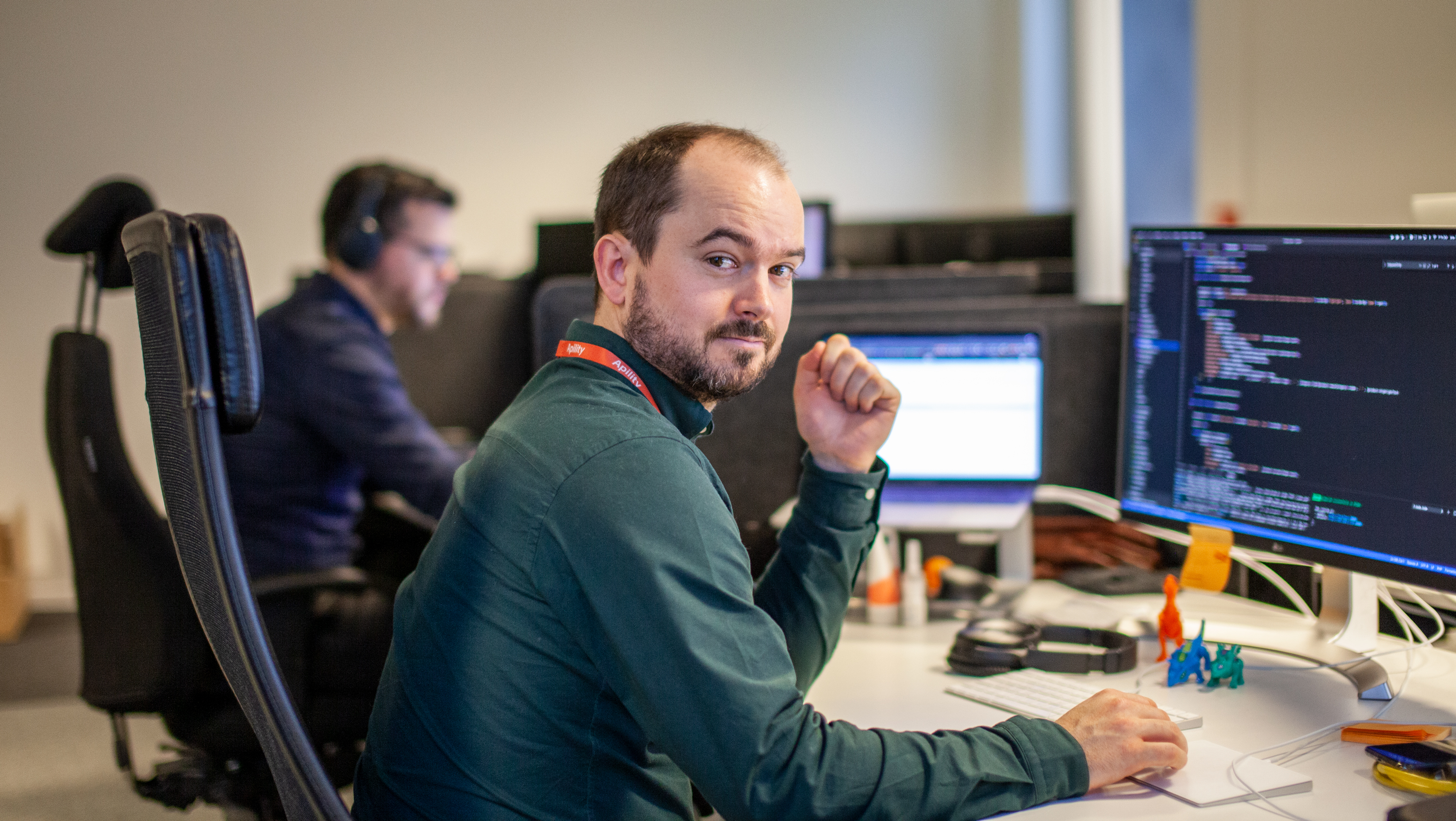
At one point, I had a feeling that I didn't quite know how everyone was doing internally at work. I felt the need to be able to follow up each person in a more structured way, says Olav Øyen, CEO of Apility. Motivati became the leadership tool that solved the challenge.
As the leader of a growing company, he needs enough time to hire new employees and follow up each individual employee, while also ensuring good, seamless project management across the company as a whole.
– In technology, you have a challenge and you have a solution. Being responsible for staff gives you a completely different responsibility – we are talking about people and, not least, working with people. Naturally, that involves completely different considerations.
–Apility is a pure technology company with its own product line. We deliver cloud-based solutions that create value for our customers. That is why we depend on good project management, so that we can deliver on time and within budget.
He started the company in 2010, and today it is part of the media group Media Bergen.
– It wasn't a given that I would lead the company, but since I built most of the underlying product line and know it well, it became natural for me to take on that role, as is often the case in a start-up.
He notes that working with leadership is much harder than delivering technology.
– There has been a lot of learning in this for me. I feel I have a good relationship with all the employees and an open dialogue about how we do things and, not least, how we can get better. But eventually there was a need to follow up each employee in a more structured way.
– I started googling a bit, but most of what came up were paper-based templates with ready-made questions, and I really hate paper. A partner tipped me off about Motivati, and it was as if everything fell into place. The tool is cloud-based and paperless, and at the same time so simply set up. The underlying method also works brilliantly.
– One of the reasons I've become so incredibly fond of Motivati is that it gives me so much information before the conversation itself. Everyone answers the same survey, but the material for each employee becomes so concrete, and you see so clearly what the conversation should be about. There's also no doubt that it appeals to the technologist in me that graphs show what matters most to each employee, and that you can also look at the average for the whole company.

– Everything was very orderly and structured, and the employees were very happy with the way it was done. The action plan is used diligently, which also makes it easier to follow up each person after the conversation.
Have you gained any new perspectives as a leader?
– We score very highly on well-being in the company, and that is important to me. Everyone is very happy and satisfied with their working day. But the method gave us a picture of concrete areas for improvement that are typical of growing companies. The great thing about that is that I can adapt and get a better insight into what each person needs from me as a leader. The employees can also see that the company is tackling a number of things that the group felt haven't worked so well. And that is important. That is why we have launched concrete measures based on what came up in Motivati.
– I'm looking forward to a new round of conversations this summer to take the temperature on how we are doing.
What are your final thoughts?
– It is quite simply an incredibly good tool. The cost isn't high either, so the investment is definitely a no-brainer!