New requirements for the psychosocial work environment: Why dialogue matters more than ever

Eirin Eriksen Horvei
October 14, 2026

Why do some teams work better than others – even with the same goals, resources and competence? The answer often lies in something invisible but crucial: psychological safety.
How critical psychological safety is, and why it is so important, has been underlined by many. Google identified psychological safety as the most important characteristic of high-performing teams (Duhigg, 2016). Hugander and Edmondson (2024) found that management teams that trained in perspective-taking and dialogue achieved higher psychological safety and made better decisions, which in turn affected the organisation's results.
Psychological safety can therefore have an effect, including on the bottom line, by making better use of the potential in collaboration and each individual's competence. Recent research has found support for the idea that it can be developed systematically, and that it starts with how leaders meet each employee.
A study by Castro and colleagues in 2022 shows that employee appraisals focusing on each employee's psychological needs have a far greater effect on the team's psychological safety than a focus on tasks and goals alone.
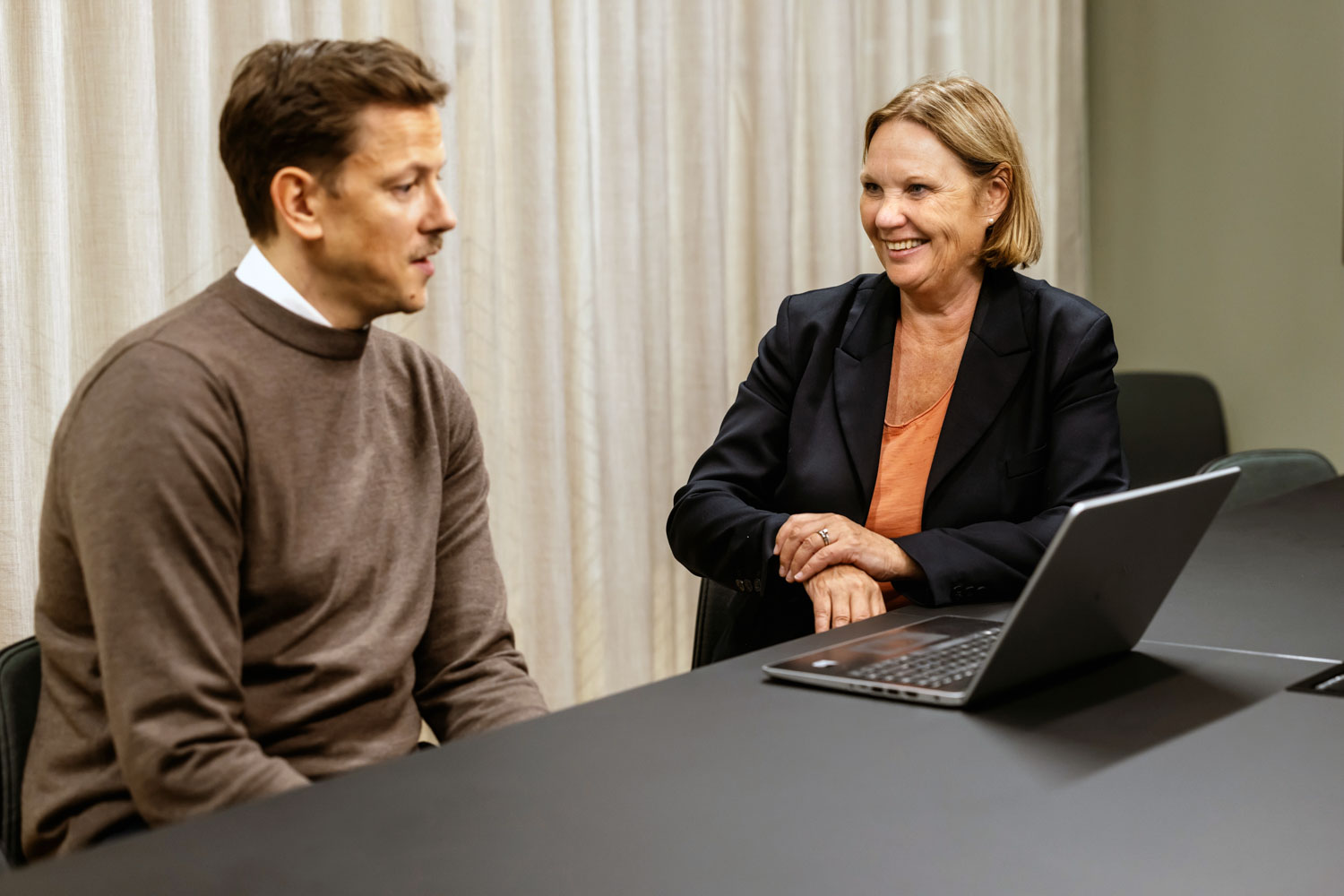
In the experiment, the leaders received different types of guidance for one-to-one conversations with their employees. It turned out that teams where the leaders were helped to understand and meet each employee's individual needs experienced a marked increase in psychological safety. In addition, the dynamic between leader and employee changed positively: employees felt more supported and saw the leader as a role model they would recommend.
These findings underline that such a one-to-one conversation had a positive effect on team members' perception of their leaders (Castro et al., 2022). Making room for the people behind the performance is essential for good leadership.
At Motivati, we have worked on this for several years through the Motivation Analysis™ – a mapping tool that enables leaders to understand what really motivates each person in the team. When a leader knows what motivates their employees, they gain unique insight into what those employees need to thrive and perform at work. Leaders can then tailor the employee appraisals based on what emerges from the Motivation Analysis™. This way, the conversation feels more relevant to employees, and the leader also has the opportunity to follow them up appropriately and adapt their leadership style to what employees actually need. This is not just nice – it is strategic.
The research by Castro and colleagues (2022) confirms that a focus on individual needs is the first step towards building psychological safety, and that it does not pay to prioritise tasks and goal achievement before psychological safety has been established. When employees feel that their leader understands and adapts to their needs, trust and safety increase. Only then does it feel safe to take risks, ask questions and share ideas – everything that creates innovation and development in teams. The study's results therefore show not only that psychological safety can be shaped, but also how important leadership behaviour is for developing team culture.
Psychological safety is crucial for high-performing teams, and research shows that it can be built systematically when leaders focus on individual needs rather than on tasks alone. Studies such as Castro et al. (2022) show that one-to-one conversations in which the leader understands and adapts to the employee's motivation and needs increase safety, trust and willingness to share ideas. By actively using the Motivation Analysis™ in your leadership, you get a concrete starting point for understanding your employees' unique needs and motivation. This will strengthen relationships, promote innovation and lead to better results.
Would you like to know more about how you can use the Motivation Analysis™ to create psychological safety and better performance in your team? Get in touch with us at Motivati – we're happy to help!