
New requirements for the psychosocial work environment: Why dialogue matters more than ever

Eirin Eriksen Horvei
October 14, 2026

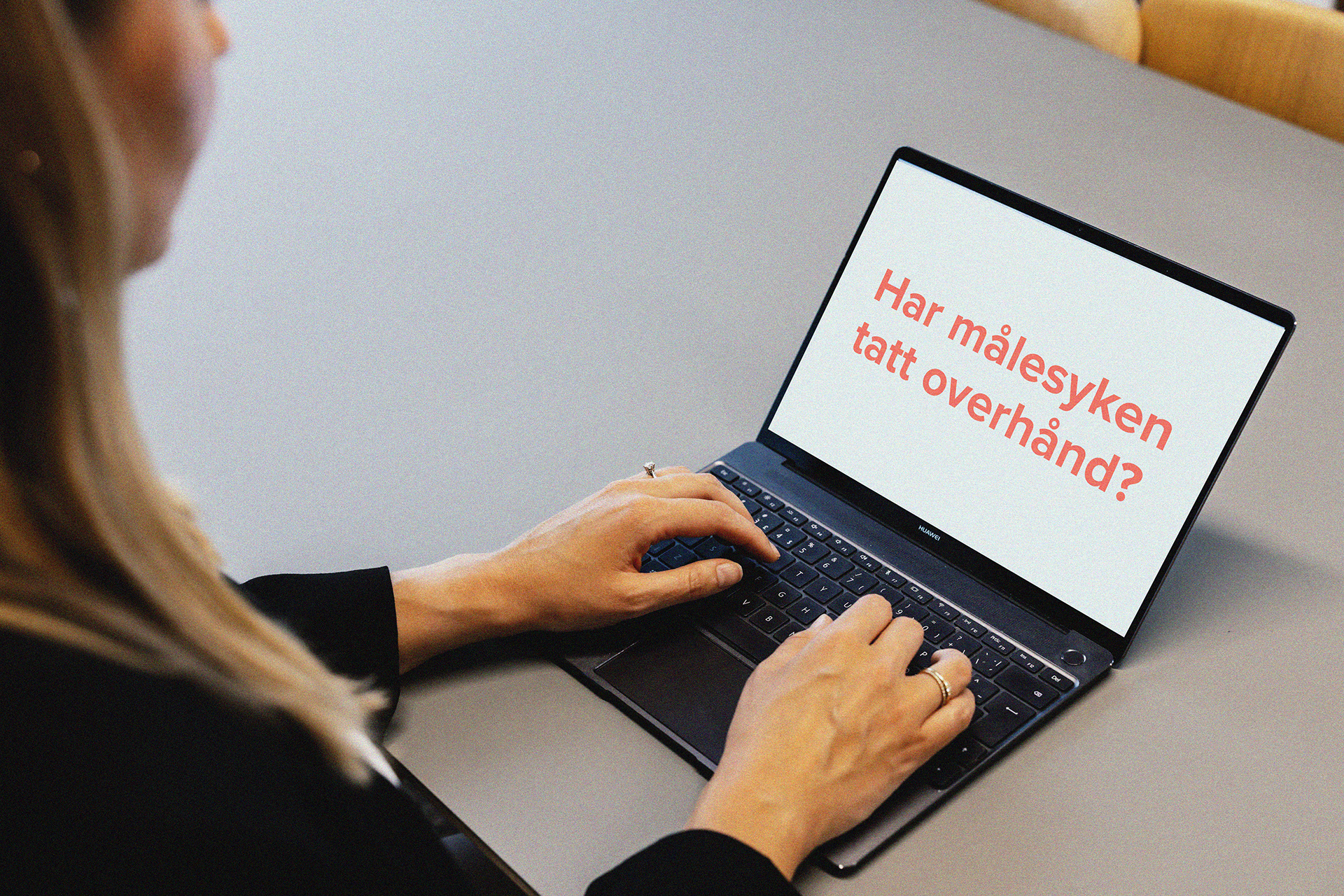
I keep meeting organisations that measure more than ever: working environment, well-being, engagement, leadership, sickness absence – pulse and temperature. The ambition is good, but I'm still often left with the question: what do we think the measurements will do for us?
Not everything can be measured in the same way. Some things can be counted; other things must be understood. Well-being, working environment and engagement are not objective facts, but subjective experiences. They can give indications – not definitive answers. And the more we forget that, the greater the risk that the numbers give us a false sense of security.
Working life has developed an interesting vocabulary. We talk about pulse and temperature checks as if the organisation were a body. The only difference is that elsewhere in life, when we want to measure our pulse, we use a heart-rate monitor, and to measure temperature we use a thermometer. We measure directly, not through anonymous questionnaires sent out every quarter.
All too often we behave as if the measurement itself is the solution – as if the numbers create change, as if a dashboard leads to a better working environment, greater well-being or wiser leadership. It doesn't.
The intention behind measurement is good: we want to understand, improve and analyse. We want to make better decisions based on facts. But somewhere along the way, many organisations have gone from curiosity to measurement mania.
We measure before we have decided what we are actually going to do, perhaps without the capacity to follow up, and without involving the people who live the reality behind the numbers.
And the result? More surveys. More reports. More PowerPoint slides. Yet surprisingly little changes in everyday life.
For many years, we have been taught to set SMART goals – specific, measurable and time-bound. But outcome targets rarely say anything about how we are going to succeed.
Lower sickness absence doesn't tell us what we need to do differently tomorrow. Higher well-being says little about which actions actually create it. At the same time, there is extensive research on what strengthens the working environment, motivation and performance. We know a lot about what works: it's about good relationships, clear expectations, a sense of mastery, fairness, role clarity, autonomy and the safety to speak up, among other things.
Even so, we often measure these factors again and again – without systematically doing more of what we know works.
What if we shifted the focus a little? From: “How are we doing on the results?” To: “Did we do what we know works – today?”
Perhaps this is where the most important measurements actually lie – not in the systems, but in the reflections? The working environment is and will remain a shared project to which both leaders and employees must contribute:
These are not “soft” questions. They are brutally concrete, and far closer to action than many KPIs.
Many employee surveys are anonymous, for good reasons. Anonymity can provide the security to be honest. At the same time, anonymity has a downside we talk about far too little.
When we don't know who is struggling, what specifically is causing frustration, or where the shoe pinches, the follow-up can become vague. We end up with general measures based on general numbers: a bit more information, a bit more focus, perhaps a course or an all-staff meeting – and we hope it hits the mark.
Anonymity can also make it easier to answer unfiltered. The feeling here and now becomes the answer. Today's frustration, or that of the most recent incident, can colour the whole assessment. Not because people want to be unreasonable, but because they can. They don't have to answer for nuance, context or the bigger picture.
The answers are often completely honest. But honest answers are not always the same as balanced or actionable answers. When we cannot ask follow-up questions, explore what lies behind a score, or distinguish between systemic challenges and temporary frustration, we are left with numbers that shout loudly – but unclearly.
That is why measurements can never replace dialogue, relationships and trust.
Honesty in working life rarely arises in a questionnaire. It arises in dialogue, in the relationship between leader and employee. And it requires psychological safety – the certainty that what I share will be met with curiosity, respect and responsibility, not defensiveness or sanctions.
Here lies an obvious dilemma: when the employer systematically asks employees to be anonymous in order to dare to be honest, an implicit signal is sent at the same time – a signal that we are not safe enough to deal with this directly.
Anonymity thus becomes both a protection and a confirmation of distance. It is meant to provide security, but can at the same time cement the notion that open dialogue is not possible, or not wanted. We measure psychological safety while organising ourselves as if it does not exist.
Perhaps the bravest employers are not those who measure the most, but those who dare to work purposefully to make anonymous surveys unnecessary?
It is demanding to build relationships that are safe enough for people to speak up under their own name. It takes time, and it requires leaders who can bear to hear what is not fully thought through, not nicely phrased or comfortable to receive. But that is precisely why this is where the most important work lies.
Psychological safety is not created by a questionnaire. It is created in everyday life: in the small moments that tell employees whether it is actually safe to be honest:
When employees feel that speaking up makes a difference – that it leads to dialogue and action, not silence or excuses – something important happens: the need for anonymity decreases. Not because people are pressured to be open, but because they want to be.
This is not a showdown with measurements. Numbers can be useful, and sometimes absolutely necessary. But they must be used with humility and wisdom – as a starting point for dialogue and action, not to satisfy a need for control.
I believe the biggest risk in working life today is not that we know too little, but that we do too little of what we already know works. Perhaps the bravest thing we can do is to measure a little less and do a little more? Not ask one more time how people are doing, but actually behave as if the answer matters.
Because, in the end, it is not what can be counted that counts the most.
It is what we do – every day.



